
HMEC 25-KA - Communication headset SENNHEISER - Free user manual and instructions
Find the device manual for free HMEC 25-KA SENNHEISER in PDF.



| Product type | Communication headset with active noise reduction NoiseGard™ |
| Brand | Sennheiser |
| Model | HMEC 25-KA |
| Intended use | Communication in aircraft cockpits |
| Transducer principle (headphone) | Dynamic, open, supra-aural |
| Frequency response (headphone) | 16 Hz - 22 kHz |
| Impedance (headphone) | 200 Ω (mono) / 400 Ω per side (stereo) |
| Active noise reduction (NoiseGard™) | 15 dB ± 3 dB from 100 Hz to 2 kHz (compensation frequency: 50-600 Hz) |
| Microphone type | Electret condenser capsule (self-polarized) with noise compensation |
| Microphone frequency response | 300 Hz - 5 kHz (DO-214 compliant) |
| Max. sound pressure level | 120 dB SPL (at 1% distortion) |
| Microphone output voltage | 400 mV ± 3 dB at 114 dB (at 6 mm, DO-214 compliant) |
| Microphone load impedance | 150 Ω |
| Power supply (NoiseGard™) | 2 alkaline-manganese LR6 (AA) batteries, 1.5 V, 2700 mAh |
| Battery life (NoiseGard™) | Approx. 20 hours |
| Battery status indicator | Bi-color LED: green (good), red (low/empty) |
| Supply voltage (microphone/headphone) | 8-16 V DC, 8-25 mA (per ARINC, connections RTCA/DO 214) |
| Weight (without cable) | 170 g |
| Cable length | 1.8 m (single-sided cable) |
| Connectors (HMEC 25-KA) | 6.3 mm stereo jack (headphone, mono wiring) + PJ-068 5.25 mm (microphone) |
| Included accessories | Carrying pouch, windscreen, self-adhesive velcro strap, MZQ 2002-1 clip holder |
| Maintenance and cleaning | Adjust the microphone boom carefully (do not force). Clean with a soft, dry cloth. Do not use harsh liquids. |
| Safety | NoiseGard™ is not a medical hearing protector. Do not use as a substitute for industrial noise protection. |
| General information | Complies with EC standards. Subject to change. More info at www.sennheiser.com |
Frequently Asked Questions - HMEC 25-KA SENNHEISER
User questions about HMEC 25-KA SENNHEISER
0 question about this device. Answer the ones you know or ask your own.
Ask a new question about this device
Download the instructions for your Communication headset in PDF format for free! Find your manual HMEC 25-KA - SENNHEISER and take your electronic device back in hand. On this page are published all the documents necessary for the use of your device. HMEC 25-KA by SENNHEISER.
USER MANUAL HMEC 25-KA SENNHEISER
Instructions for use
Notice d'emploi
HMEC 25-CA/HMEC 25-KA
The Problem of Noise
The negative effects of noise pollution have been proven by studies, and everybody will have experienced them at some time or another:
Nervousness
Lack of concentration
Irritability
And these are only the most obvious effects on the human body. Noise also affects the autonomic nervous system and can lead to permanent hearing damage.
There are a multitude of noise sources, and the individual very often has no influence over them. The only solution when being in a noisy place is protecting oneself against ambient noise. These noise problems are particularly prevalent in an aircraft cockpit where a pilot often has to have the communications headset so loud as to risk permanent hearing damage.
With the NoiseGard™ system, Sennheiser has come up with an effective solution. These operating instructions explain the NoiseGard™ principle and show you how to use the NoiseGard™ headset.
Noise levels
loud
140 dB Jet engine (at a distance of 25m )
130 dB Aircraft engine (This is the threshold of pain)
120 dB Pneumatic drill
110 dB Blacksmith's hammer, concrete works
100 dB Die-cast machine
90 dB Metal workshop
80 dB Tractor
70 dB Office
60 dB Conversation
50 dB Ambient noise
40 dB Living room
30 dB Library
20 dB Bedroom
10 dB Forest, no wind
Unit of sound levels is the decibel (dB). A noise reduction of 10 dB is generally perceived as being of the loudness, another 10 dB decrease halves the loudness yet again which corresponds to a loudness reduction of 75% , and so on.
HMEC 25-KA/HMEC 25-CA
A headset is comprised of two units, a headphone and a microphone. The HMEC 25-KA/-CA headset is mostly used for communication in aircraft cockpits.
The microphone is a high quality back-electret condenser microphone. As per ARINC it receives its operating voltage via a connector from the aircraft's internal power supply.
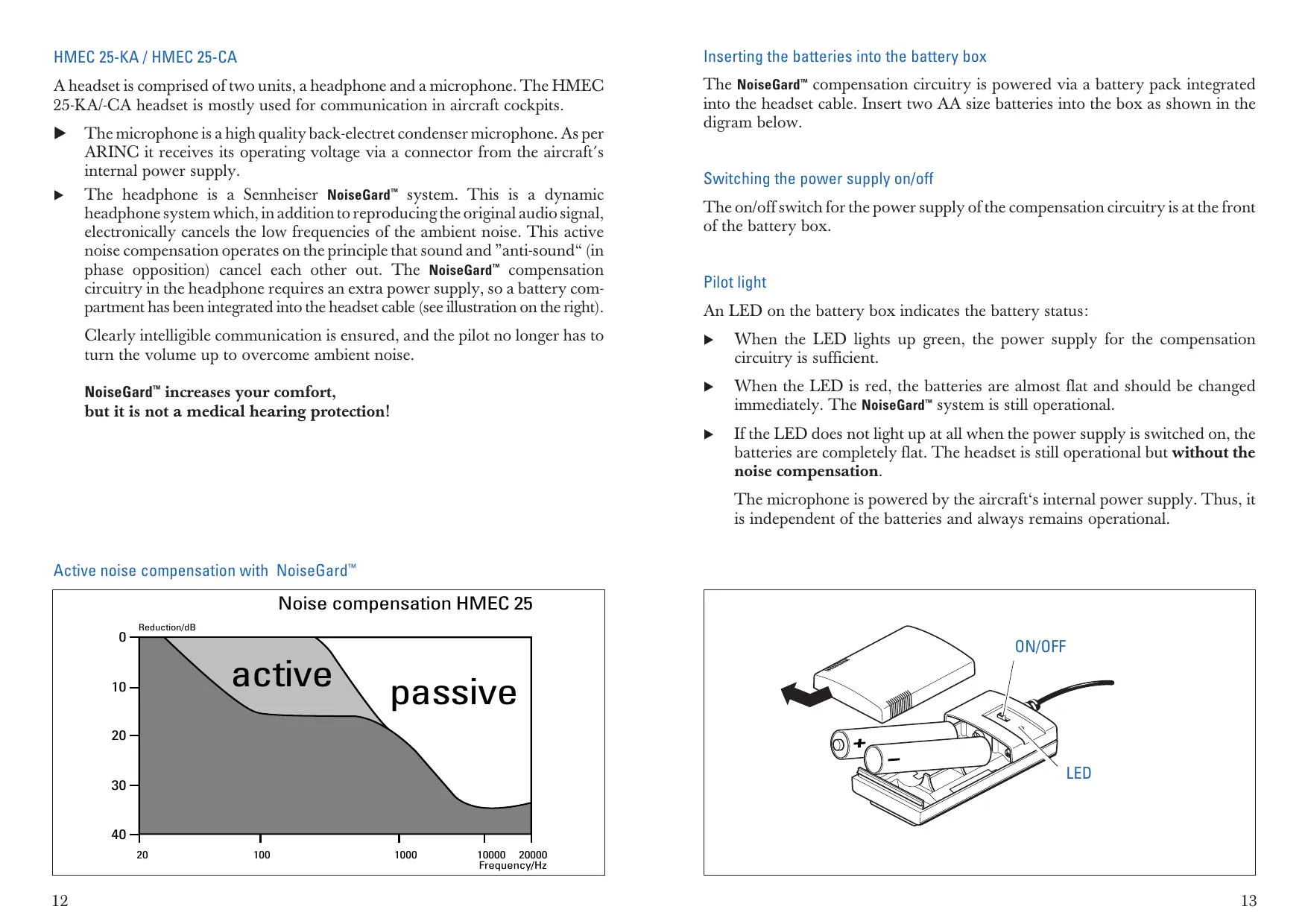
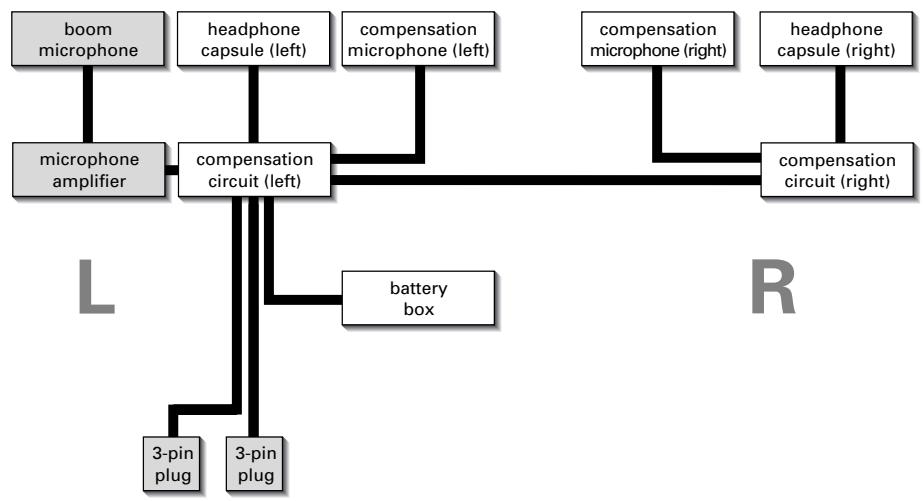
The headphone is a Sennheiser NoiseGard™ system. This is a dynamic headphone system which, in addition to reproducing the original audio signal, electronically cancels the low frequencies of the ambient noise. This active noise compensation operates on the principle that sound and "anti-sound" (in phase opposition) cancel each other out. The NoiseGard™ compensation circuitry in the headphone requires an extra power supply, so a battery compartment has been integrated into the headset cable (see illustration on the right).
Clearly intelligible communication is ensured, and the pilot no longer has to turn the volume up to overcome ambient noise.
NoiseGard™ increases your comfort, but it is not a medical hearing protection!
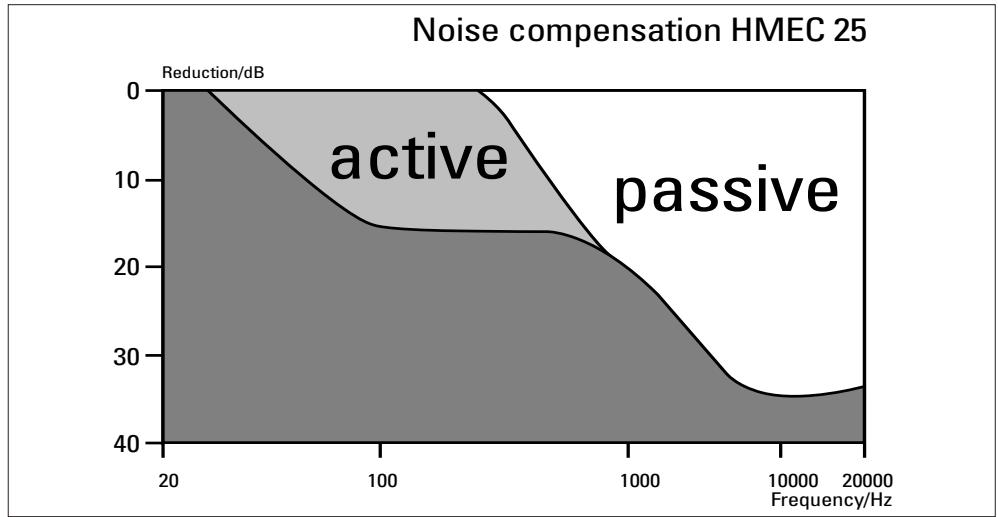
Active noise compensation with NoiseGard™
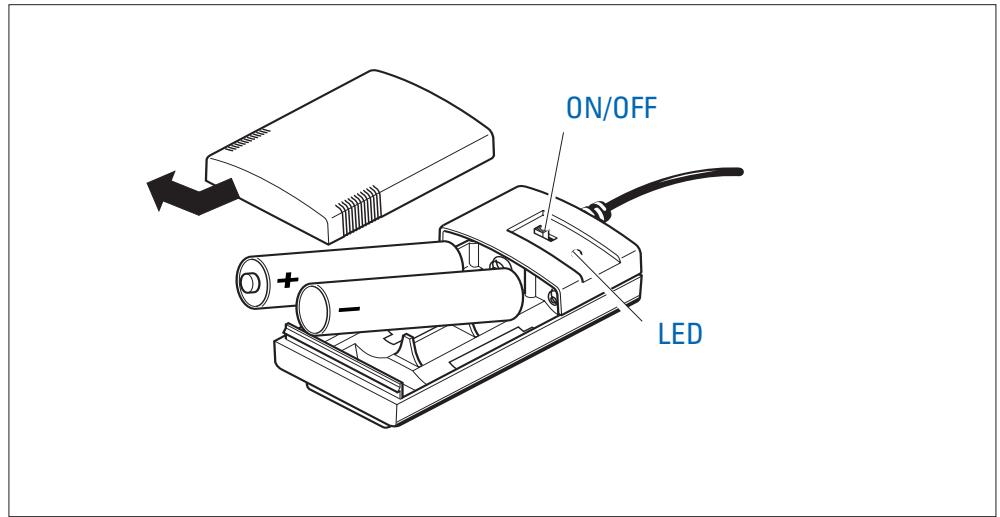
Inserting the batteries into the battery box
The NoiseGard™ compensation circuitry is powered via a battery pack integrated into the headset cable. Insert two AA size batteries into the box as shown in the digram below.
Switching the power supply on/off
The on/off switch for the power supply of the compensation circuitry is at the front of the battery box.
Pilot light
An LED on the battery box indicates the battery status:
- When the LED lights up green, the power supply for the compensation circuitry is sufficient.
- When the LED is red, the batteries are almost flat and should be changed immediately. The NoiseGard™ system is still operational.
- If the LED does not light up at all when the power supply is switched on, the batteries are completely flat. The headset is still operational but without the noise compensation.
The microphone is powered by the aircraft's internal power supply. Thus, it is independent of the batteries and always remains operational.
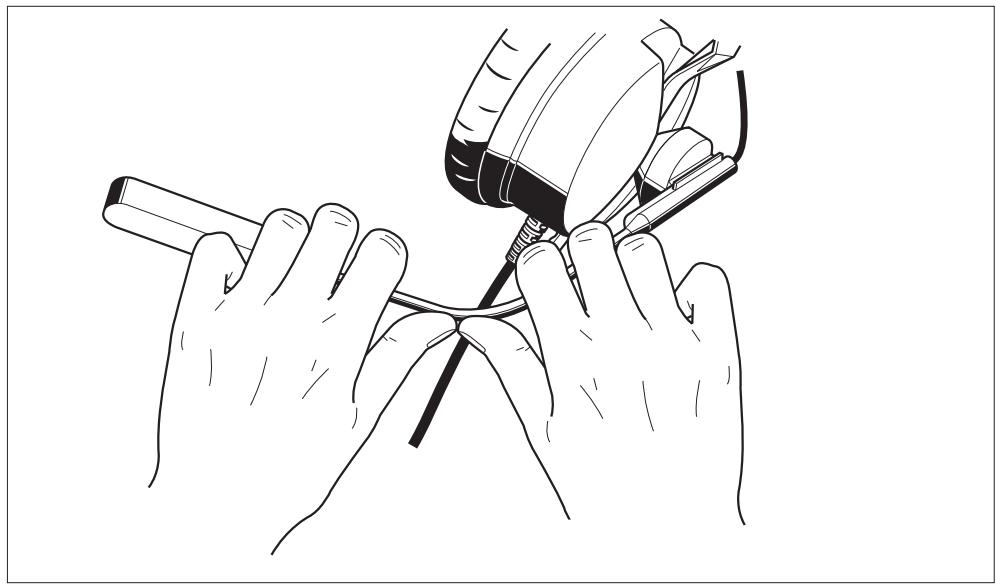
N.B.: The microphone boom is adjusted for an individual user. However, care should be taken when doing this. Once set, the boom should not be re-adjusted. If it is continually flexed it is liable to break.
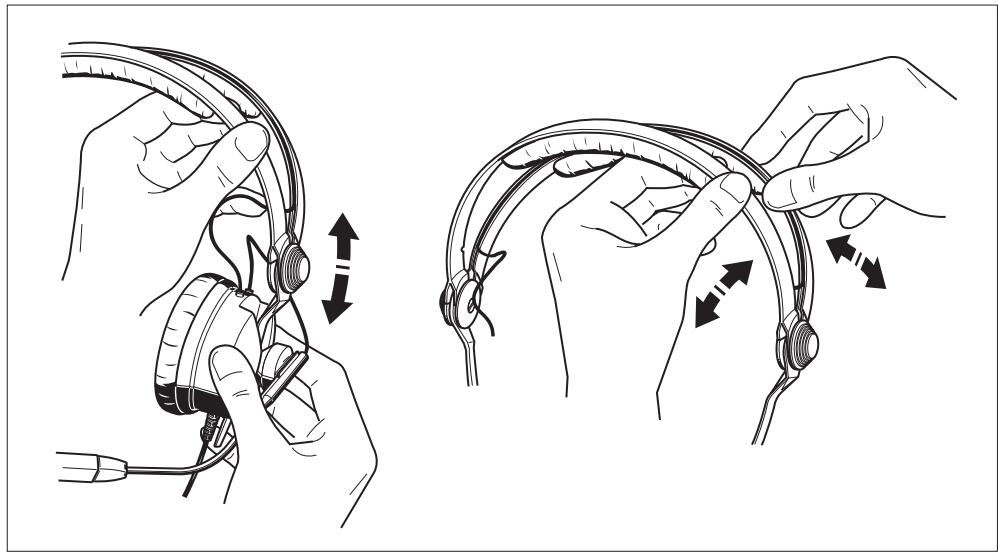
Adjusting the headband
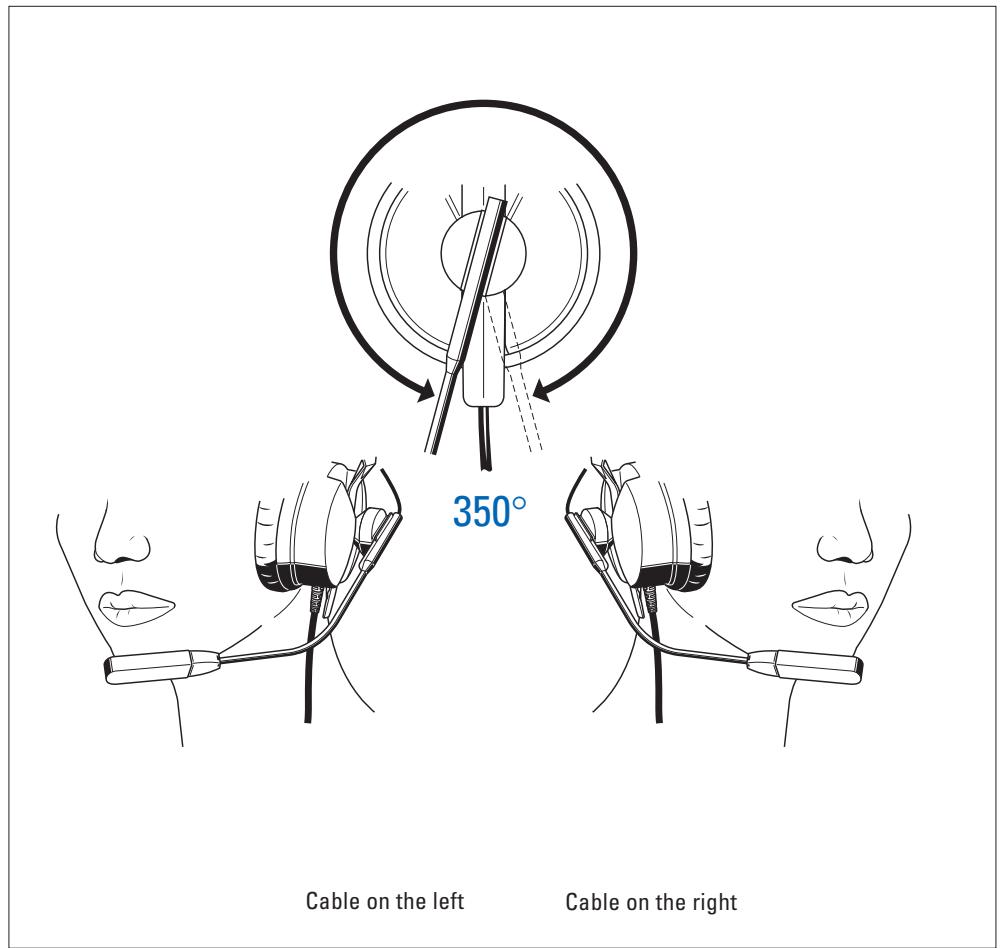
N.B.:
NoiseGard™ reduces noise and increases comfort.
NoiseGard™ is not a medical noise protection system!
NoiseGard cannot replace an industrial ear defender system for use in noisy environments!
Volume up? - NO!
When people use headphones, they tend to choose a higher volume than with loudspeakers. Listening with high volume levels for a longer time can lead to permanent hearing defects. Because the NoiseGard™ circuitry is reducing the ambient noise, the headphones can be set at a correspondingly lower level leading to more comfortable hearing conditions so protecting your hearing.
HMEC 25-CA Block Diagram
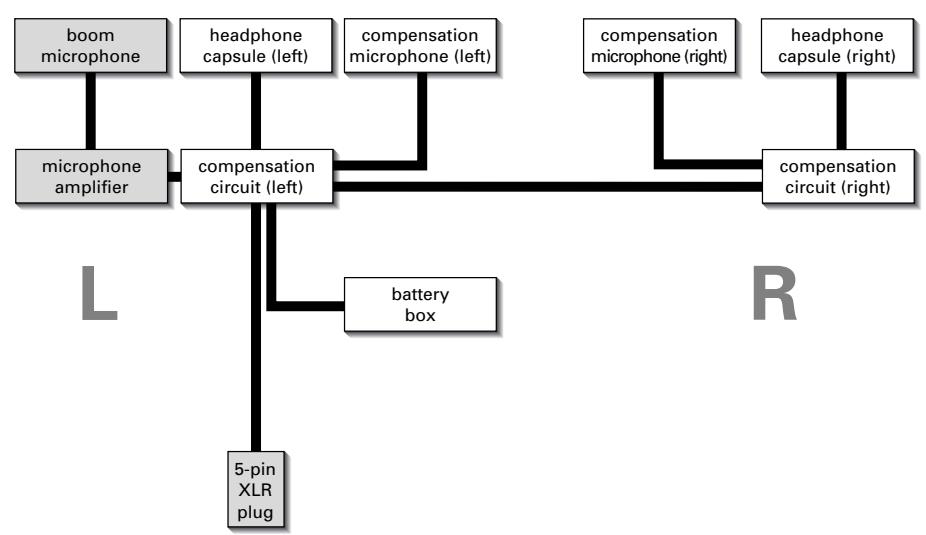
HMEC 25-KA Block Diagram
1
2
Supply schedule
1 HMEC 25-KA or HMEC 25-CA
1 Carrying case
1 wind-shield MZW 45 (Art.No 75823)
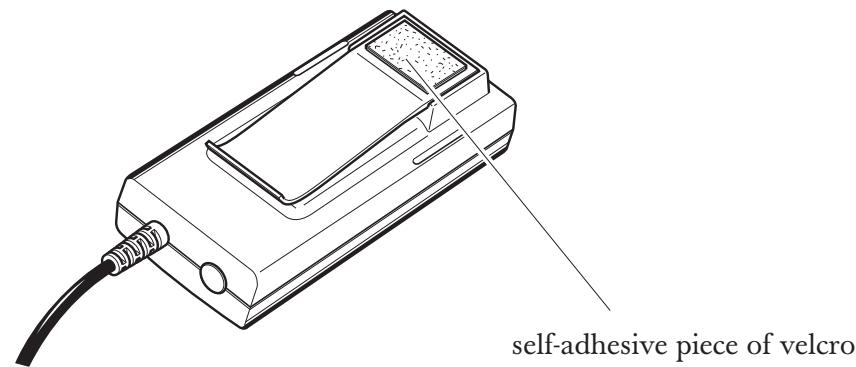
1 self-adhesive piece of velcro, fig. ①
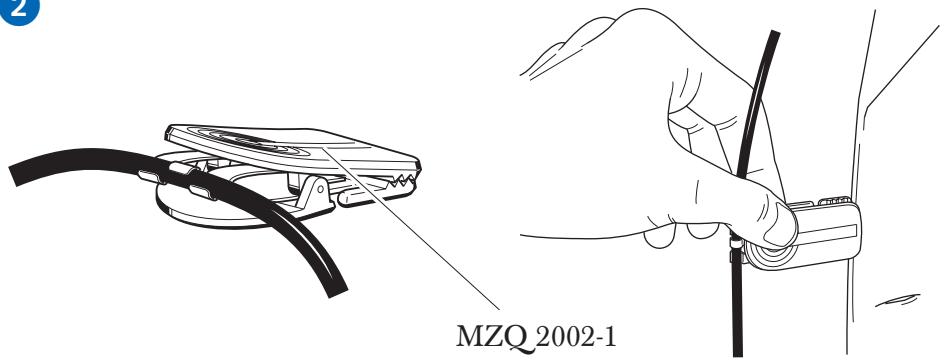
1MZQ2002-1 clip (Art.No 44740), fig. 2
Technical data NoiseGard™ HMEC 25-KA / -CA
| Headphone | ||
| Transducer principle | dynamic, open, supra-aural | |
| Frequency response | 16 Hz - 22 kHz | |
| Impedance active/passive | 200 Ω (mono) 400 Ω per side (stereo) same volume for active and passive | |
| THD | < 1 % | |
| Compensation active and passive | 15 dB ± 3 dB in the range of 100 Hz - 2 kHz | |
| Frequency response of the active compensation | 50 - 600 Hz | |
| Microphone incl. preamplifier | ||
| Transducer principle | Noise-cancelling back-electret condenser microphone capsule | |
| Frequency response (2 cm distance between mic and corner of mouth) | 300 Hz - 5 kHz (as per DO-214) | |
| Max. sound pressure level | 120 dB (THD=1 %) | |
| Output voltage | 400 mV ± 3 dB at 114 dB and a distance of 6 mm (as per DO-214) | |
| Terminating impedance | 150 Ω | |
| Operating voltage | 8 - 16 V DC, approx. 8-25 mA, connections as per RTCA/DO 214 | |
| General Data | ||
| Contact pressure | approx. 2.5 N | |
| Weight without cable | 170 g | |
| Cable | single-sided, total length 1.8 m | |
| Connectors | HMEC 25-KA | headphone: 3-pole 1/4" (6,35mm) jack plug wired mono microphone: PJ-068, 5.25 mm |
| HMEC 25-CA | XLR-5 | |
| Power supply | 2 x 1.5 V AA sizealkaline-manganese batteries (2700 mAh) | |
| Operating time | approx. 20 hrs | |
| Display | two-colour LED for indicating battery status | |
HMEC 25-CA/HMEC 25-KA
Impedance active/passive
Distorsion harmonique
Compensation active et passive
HMEC 25-CA/HMEC 25-KA
HMEC 25-CA / HME 25-KA
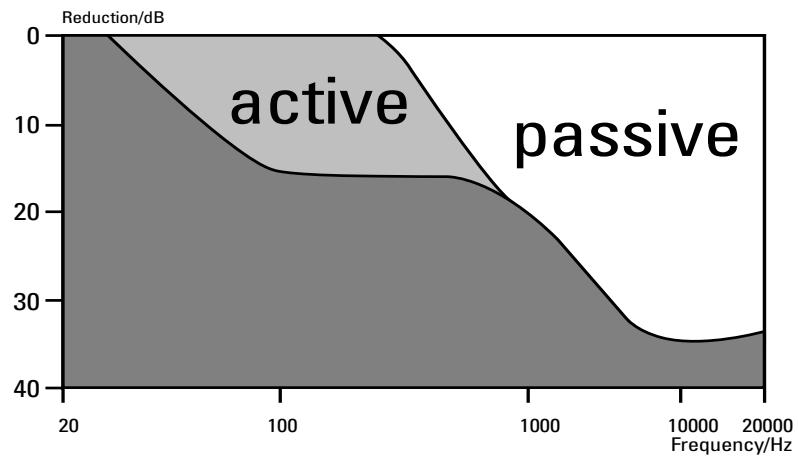
Noise compensation HMEC 25
HMEC 25-CA/HMEC 25-KA
Sennheiser electronic GmbH & Co. KG declare that this device is in compliance with the applicable CE standards and regulations.
Certification
Up to date information on Sennheiser products can also be found on the Internet at "http://www.sennheiser.com".
Subject to alterations